
White flowers don’t try hard. That’s actually the point. While other colors compete for attention, white just… works. In a wedding bouquet, a cottage garden, a funeral wreath, or a grocery store vase — white belongs everywhere and rarely looks wrong.
But here’s what surprises most people: white isn’t one thing. The different types of white flowers span from cool and crisp to warm ivory to faintly blush or green-tinged. Once you start noticing those differences, you can’t stop noticing them — and your arrangements get noticeably better as a result.
This is a practical guide to the white flowers that actually matter: what makes each one distinct, when to use them, and how to combine them well.
White Lilies: Pick the Right One for the Job
Most people say “white lily” like it’s one flower. It isn’t. The types of white lilies are meaningfully different from each other, and choosing the wrong one for a context — say, a heavily scented Oriental lily in a small hospital room — is the kind of mistake that’s hard to walk back.
Here’s how they actually differ:
- Easter lily: The trumpet-shaped classic. Pure white, upward-facing, and carries a fragrance that’s distinctive without being aggressive. It’s tied to spring and renewal culturally, which makes it a natural choice around Easter — but it holds its own in summer gardens too.
- White Asiatic lily: Clean, upward-facing blooms and almost no scent. This is the one to reach for when someone has fragrance sensitivities, or when you need a white lily that won’t compete with food or other flowers in a tight space.
- Oriental white lily: Larger blooms, deeper bowl shape, and a heady fragrance that carries surprisingly far. Two or three stems in a room and you know they’re there. That’s a feature when you want impact — and a problem when the space is small.
The honest shortcut: if you’re unsure, go Asiatic. It’s the most forgiving of the three and works in almost every setting without risk of overwhelming the space.
White Hydrangeas: The Workhorse of White Gardens
If you need volume — real, lush, fill-the-frame volume — hydrangeas are the answer. A single stem gives you a full, dense cluster of tiny blooms that does the work of three or four individual flowers in an arrangement. The types of white hydrangeas each have a slightly different character worth knowing.
- Annabelle hydrangea: Big round clusters, soft white, and — crucially — shade tolerant. Most white flowers want full sun. Annabelles will actually perform in dappled shade, which makes them the go-to recommendation for the problem spots in a garden where nothing else seems to thrive.
- PeeGee hydrangea: Cone-shaped rather than round, and the blooms shift from creamy white toward dusty pink as summer ends. That seasonal color change is actually a design feature — you get two distinct looks from one plant without replanting.
- Smooth hydrangea: Similar look to Annabelle but bred for harder winters. If you’re gardening in Zone 3 or 4 and keep losing hydrangeas, this is the variety to try.
A landscape client once had a long north-facing fence that had defeated every plant tried there for years. A full run of Annabelles turned it into the best feature in the yard by July. Shade tolerance is underrated in plant selection, and Annabelles prove the point every summer.
The Supporting Cast: White Flowers That Do the Real Work
Lilies and hydrangeas get the credit, but the different types of white flowers that often make arrangements actually sing are the ones nobody talks about at the florist counter.
- White roses: Structural, long-lasting as cut flowers, and carrying symbolism that needs no explanation in most Western contexts. The go-to for weddings for practical reasons as much as romantic ones.
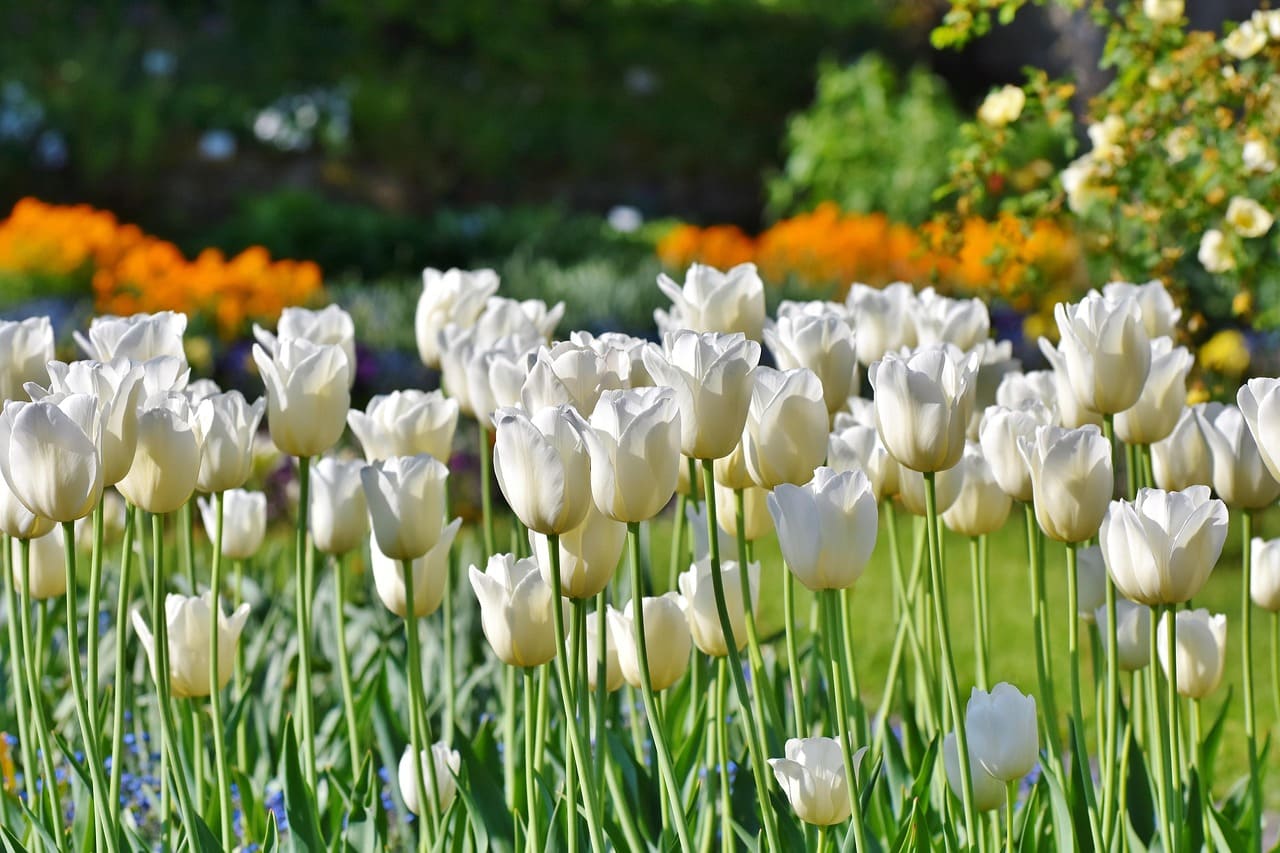
- White tulips: Clean and architectural in a vase. They move as they open — stems bend, petals spread — which gives a static arrangement some natural life over a few days.
- White daisies: Among the many types of daisies you can grow, the white-petaled varieties — especially Shasta daisies — are some of the most useful flowers in the garden. They bloom for weeks, require almost no care, and add a casual, grounded energy to arrangements that stops fussier blooms from looking overdressed.
- White cosmos: Feathery and light, they fill space in an arrangement without adding visual weight. Think of them as the white space in a layout — necessary, even when you don’t consciously notice them.
My honest take: Shasta daisies are the most underused white flower in home gardens. They’re tougher than they look, they cut well, and they make expensive flowers look better by comparison. Plant more of them.
How to Actually Use White Flowers Well
White flowers are often defaulted to as “safe” or “neutral.” That’s a limited way to think about them. Used deliberately, they’re one of the most versatile design tools available — in a garden or in a vase.
- All-white arrangements: The variation in texture between lily petals, hydrangea clusters, and daisy faces is enough to carry a full bouquet without any color at all. Subtle tonal differences — bright white vs. creamy ivory vs. cool white — add depth that feels intentional rather than accidental.
- White against bold color: Put white flowers next to deep burgundy, cobalt blue, or forest green and both colors sharpen. White doesn’t dilute strong colors — it makes them more themselves.
- Evening gardens: White flowers reflect ambient light in a way that other colors don’t. A garden planted with white lilies, cosmos, and hydrangeas genuinely glows at dusk — not metaphorically, but visibly. If you have an outdoor entertaining space, this is worth planning around.
The tonal variation point is one I come back to constantly: ‘white’ arrangements fail when every flower is the same temperature of white. Mix a warm ivory hydrangea with a cool bright lily and a cream rose, and the arrangement has dimension. Match them all and it goes flat.
What White Flowers Actually Communicate
White flowers show up at life’s most significant moments — weddings, funerals, milestone birthdays, hospital visits — because they carry meaning without being specific about it. They hold space. They don’t impose a particular emotion; they make room for whatever emotion is already present.
That said, context matters. In Western cultures, white is strongly tied to weddings and new beginnings. In many East Asian traditions, white is the color of mourning. The same white lily reads completely differently at a Japanese funeral than at a British wedding. If you’re designing flowers for a specific cultural context, it’s worth a five-minute conversation before you finalize the palette.
I’d add one more layer: within Western traditions, different white flowers carry different weight. White roses say “wedding.” White lilies say “condolence.” White daisies say “get well soon.” None of those are rules, but they’re patterns worth knowing when the occasion is emotionally significant.
One Color, Endless Variation
The different types of white flowers cover far more ground than most gardeners and buyers realize. The types of white lilies alone give you three distinct options with real functional differences. The types of white hydrangeas range from shade-loving workhorses to color-shifting season extenders. Add in daisies, cosmos, roses, and tulips, and you have a full palette — all technically the same color.
The best place to start is to pick one white flower you’ve never grown or used in an arrangement before. Try it for a season. Notice what it does that your usual choices don’t.
White looks simple right up until you know what you’re looking at. Then it gets interesting fast.